Meknès
Promise at DawnMeknès is the North African city where the narrator’s attempt to continue the war collides with the armistice, and where he moves between military uncertainty, the pull of his mother’s voice, and brief personal refuge. Its temporary role as a flying-school headquarters gives way to a wider portrait of a city whose Medina and walled red-light district expose the upheaval of defeat through crowded, sharply contrasting spaces.
Wartime Arrival and the Armistice
The narrator and his companion reach Meknès after flying to Algiers without authorization, hoping to continue their military service. The flying school has temporarily established its headquarters in Meknès. Their arrival coincides with news that North African authorities have accepted the armistice; orders to ground all aircraft follow, issued in response to crews who had tried to reach Gibraltar. The city thus marks an abrupt reversal: a place intended as a staging point for further action becomes a site where flight is forbidden and the next course remains uncertain.
The narrator’s mother responds to the news with anger, brandishing her cane and urging him to take matters into his own hands. Her call for continued resistance had already reached the Buffa Market in Nice before Charles de Gaulle’s broadcast from London on June 18, 1940. In Meknès, her agitation remains a force in the narrator’s consciousness as he wanders the city, unable to put aside either the defeat or her demand that France continue fighting.
The Medina as a Place of Disorientation
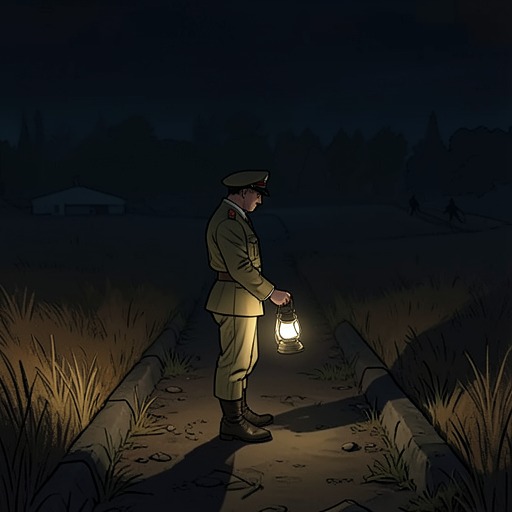
The narrator spends long hours wandering the Medina of Meknès, amid crowds and unfamiliar colors, sounds, and smells. He tries to escape his mother’s imagined rebukes by visiting bazaars, looking at worked leather and metal, sitting in Arab cafés with cigars and green tea, and moving through lanes crowded with veiled women, beggars, hawkers, donkeys, and soldiers. The sensory abundance offers temporary distraction, but his mother’s voice follows him; she reproaches him for sight-seeing while France is defeated and its government accepts the armistice.
That contrast shapes the Medina’s narrative role. Its busy streets and markets offer the narrator movement and new impressions, yet not a clean escape from the inherited idea of duty. He sometimes manages to lose himself in the crowd, but his mother’s call to resist remains close. The city becomes both a real landscape he explores and the setting for a struggle between his wish to withdraw and the identity she has pressed upon him.
A Brief Refuge in the European Quarter
At a bar in the European quarter, the narrator confides his private distress to a blonde barmaid. Her attentive gaze briefly makes him feel transformed from an incomplete figure into a man with courage and strength. When he tells her he means to desert and continue the war from England, she offers him a small gold cross from a chain around her neck. He impulsively proposes marriage, and she accepts, although they have known each other only a short time.
The encounter offers a momentary alternative to the demands associated with Meknès: the narrator imagines staying with someone who seems to understand him rather than carrying on toward England. He recognizes, however, that his apparent wish to protect the woman conceals his own need for feminine comfort and support. The bar and the proposal make Meknès a place of emotional improvisation, where the narrator reaches for intimacy as the world around him seems to be sinking.
Meknès Bousbir and the City in Defeat
The narrator also enters Meknès Bousbir, a fortified district described as a town in itself, enclosed by a high wall and containing thousands of prostitutes of many nationalities and races in hundreds of houses. Armed sentries guard its gates, while military police patrol the streets, though their attention is occupied largely by fights among soldiers. In the days immediately following the armistice, the district is crowded with troops from across the French Empire, their different uniforms and headdresses forming a visible cross-section of the forces gathered there.
The scene is at once crowded and disorderly: music pours from open windows as soldiers, deprived of victories and battles, seek sexual release. The madams have forbidden the use of beds and put mattresses on the floor to limit the damage caused by the violence of the encounters. Set beside the narrator’s solitary wandering and his brief bid for attachment, Bousbir presents another response to military defeat—collective, physical, and organized around the needs of soldiers. Meknès holds these incompatible experiences together: a grounded flying school, a Medina through which the narrator tries to escape his thoughts, and a walled district where the consequences of war crowd into the streets.